Free Printable Blood Pressure Log: 7-Day PDF Sheet
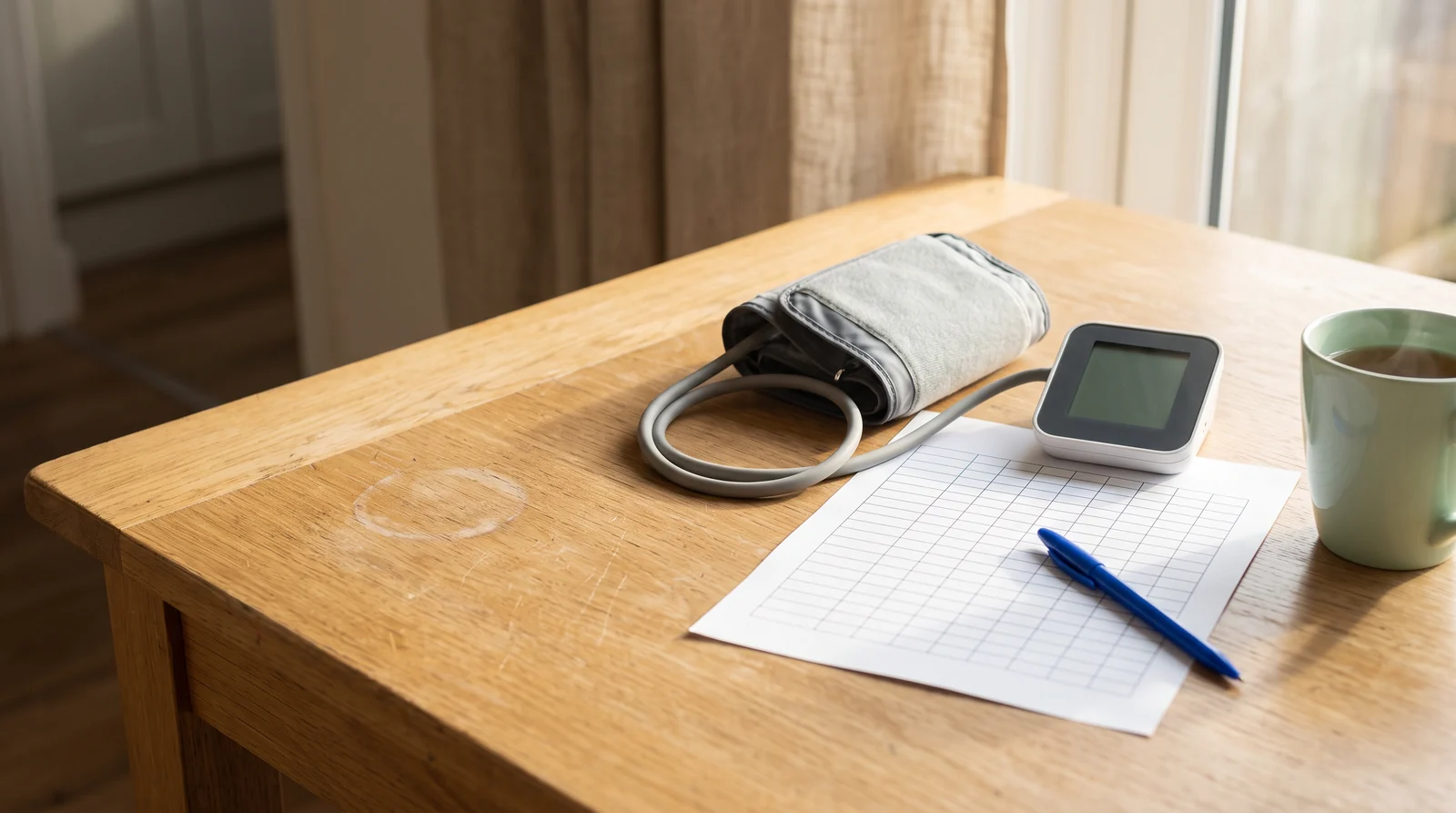
This free printable blood pressure log is one landscape US Letter page that holds a full week of home readings: morning and evening, two readings each time, with systolic, diastolic and pulse for every reading. Download the blood pressure log (PDF), print one copy per week, and use the steps below so the numbers you write down are worth showing your doctor.
The 7-day log: two readings, morning and evening
The sheet starts with three header fields: Name, Arm used (Left / Right) and Monitor. Below them is a table with seven rows, one per day, each starting with a Date. Every row has a Morning block and an Evening block. Each block has a Time box and two readings, Reading 1 and Reading 2, and each reading is split into SYS, DIA and Pulse. A Notes column on the right takes things like the time you took your medication or any symptoms.
The layout follows published guidance. The American Heart Association's home blood pressure monitoring page asks for two readings one minute apart each time you measure, taken at the same time every day. An American Heart Association News article explains that blood pressure tends to be highest in the morning and lowest during sleep, and that people being checked for high blood pressure are asked for two readings in the morning and two in the evening over the course of a week. One sheet holds exactly that week.
Your doctor may want a different routine, and the AHA page says to talk with your healthcare professional about how often to measure. Follow their schedule and leave any unused blocks empty.
Take each reading the way the American Heart Association describes
These steps come from the AHA's home monitoring page, with posture details from the CDC's Measuring Your Blood Pressure page:
- For 30 minutes before, don't smoke, drink caffeinated beverages or exercise. Empty your bladder.
- Take off the clothing over the arm you'll use. The cuff goes on bare skin.
- Sit in a chair with your back supported, both feet flat on the floor and your legs uncrossed.
- Rest your arm on a flat surface at heart level, using a pillow under it if needed. The bottom of the cuff sits just above the bend of your elbow.
- Rest quietly for at least five minutes. Don't talk or use your phone while you rest or while the cuff inflates.
- Take the first reading, wait one minute, take the second, and write both down right away.
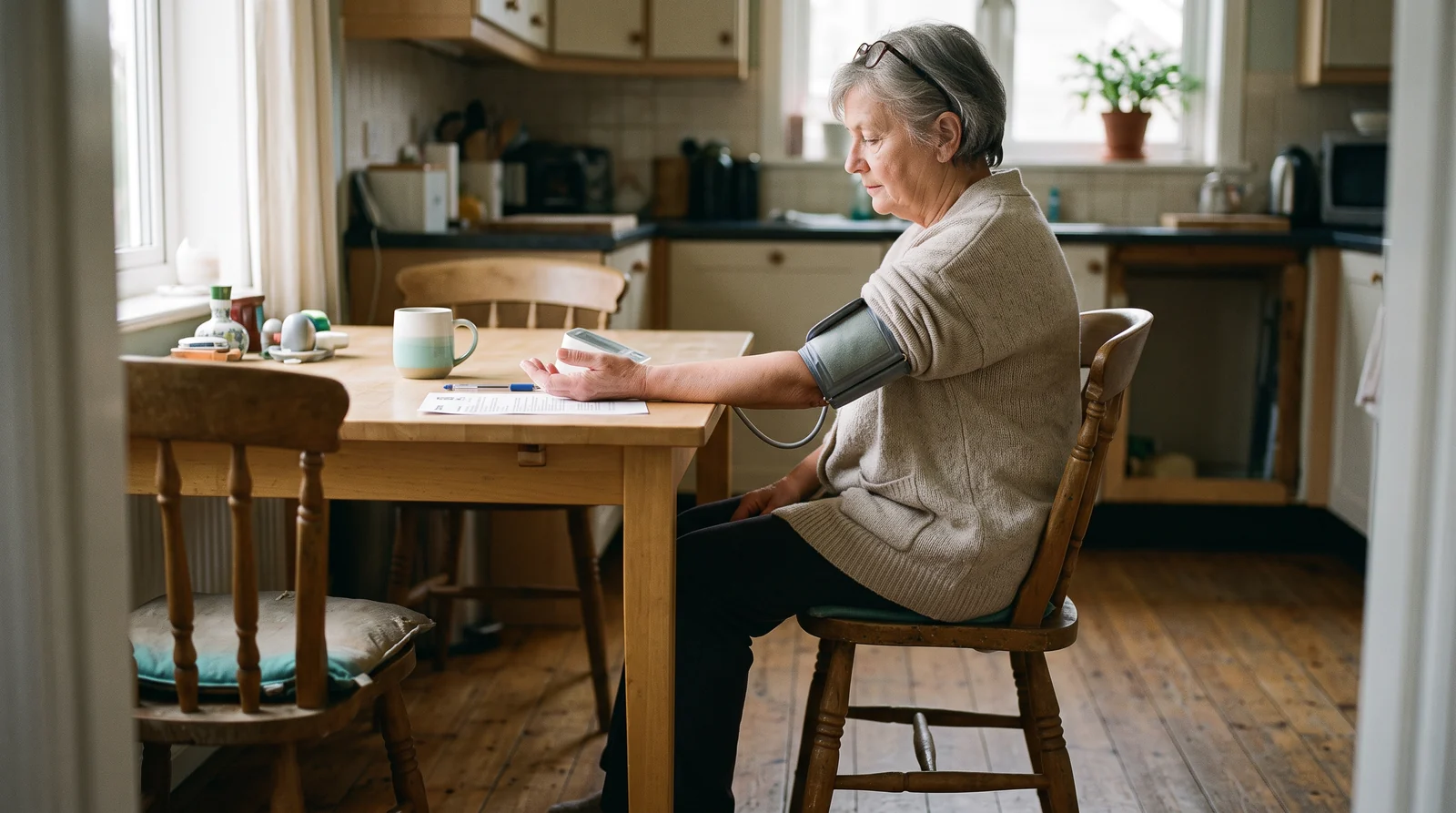
For the monitor itself, the AHA recommends an automatic, cuff-style, upper-arm model; wrist and finger monitors give less reliable readings. Choose one that has been validated, check that the cuff fits around your upper arm, and take the monitor to your next appointment so your healthcare professional can compare it with the office equipment.
If a reading is very high: the AHA says one high reading isn't an immediate cause for alarm. Take a second reading and write down both. If readings are suddenly higher than 180/120 mm Hg, wait at least one minute and test again; if they're still that high, contact your healthcare professional immediately. If you also have chest pain, shortness of breath, back pain, numbness, weakness, a change in vision or difficulty speaking, call 911. The full guidance is on the AHA home monitoring page.
Fill in the sheet, one row per day
| Field | What to write |
|---|---|
| Name | Your name, or the name of the person you measure for |
| Arm used | Circle Left or Right once for the week |
| Monitor | The brand and model, so a new device later is easy to spot in your records |
| Date | One row per day, seven rows per sheet |
| Time | The clock time you took the morning or evening pair |
| Reading 1 | SYS (top number), DIA (bottom number) and Pulse, straight from the screen |
| Reading 2 | The same three numbers from the second reading, one minute later |
| Notes | Medication time, symptoms, a missed dose, a bad night's sleep, a reading on the other arm |
A few habits make the sheet more useful. Write the numbers as the monitor shows them, without rounding and without skipping a high one; the AHA's advice for a high reading is to write down both measurements. Leave averages off the sheet unless your doctor asks for them, since every reading is already there for them to work with. The AHA says you can use either arm, as readings usually don't differ much, so the Arm used field is there to label the week rather than to pick a side.
The Notes column earns its space. A line like "evening pill at 8:10" or "headache, slept badly" next to a reading helps your doctor connect the numbers to what happened that day.
The sheet is laid out in landscape. Choose Actual size or 100% scale on US Letter paper; on A4, pick Fit to page so the table isn't cut off. Print several copies at once and keep them with the monitor.
Bring the week to your appointment
The AHA describes a single reading as a snapshot and a record over time as the fuller picture that helps you and your doctor see whether treatment is working. To get the most from that record, bring:
- the filled-in sheets, in date order, with the Arm used and Monitor fields completed;
- the monitor itself when it's new, and about once a year after that (or as the maker directs), so it can be checked against the office equipment, as the AHA advises; if it stores readings in memory, the AHA suggests taking it to your appointments;
- the list of questions linked from the CDC's measuring page, built to guide the conversation with your health care team;
- your own questions: how often to measure, which times of day, how many weeks to keep the log and what to do after a high reading.
The AHA is clear that home monitoring doesn't replace regular doctor visits, and that you shouldn't stop blood pressure medication without checking with your healthcare professional, whatever your readings show.
Keep the same log on your phone
Paper works well until the sheets pile up or the pen goes missing. In Dozzy you add blood pressure as a measurement next to your medications, get a reminder at the morning and evening times you choose, and type the numbers into the note when you mark each check done. With Premium, the weekly or monthly report lists every check with its note and can be shared as a PDF, ready to print or send ahead of a visit.
If you'd rather stay on paper, keep this sheet next to the monitor and start a new one every Monday.